
When buildings, poles, gates, or remote devices are separated by pavement or open ground, the pathway becomes the first low-voltage system to solve.
UaPtoTech plans and installs lighter underground scopes for fiber and low-voltage infrastructure, including short directional bores under roads or driveways, trenching, conduit, handholes, pull boxes, and route transitions. Heavy civil work is coordinated with qualified partners when the scope requires larger equipment, traffic control, permitting, or major restoration.
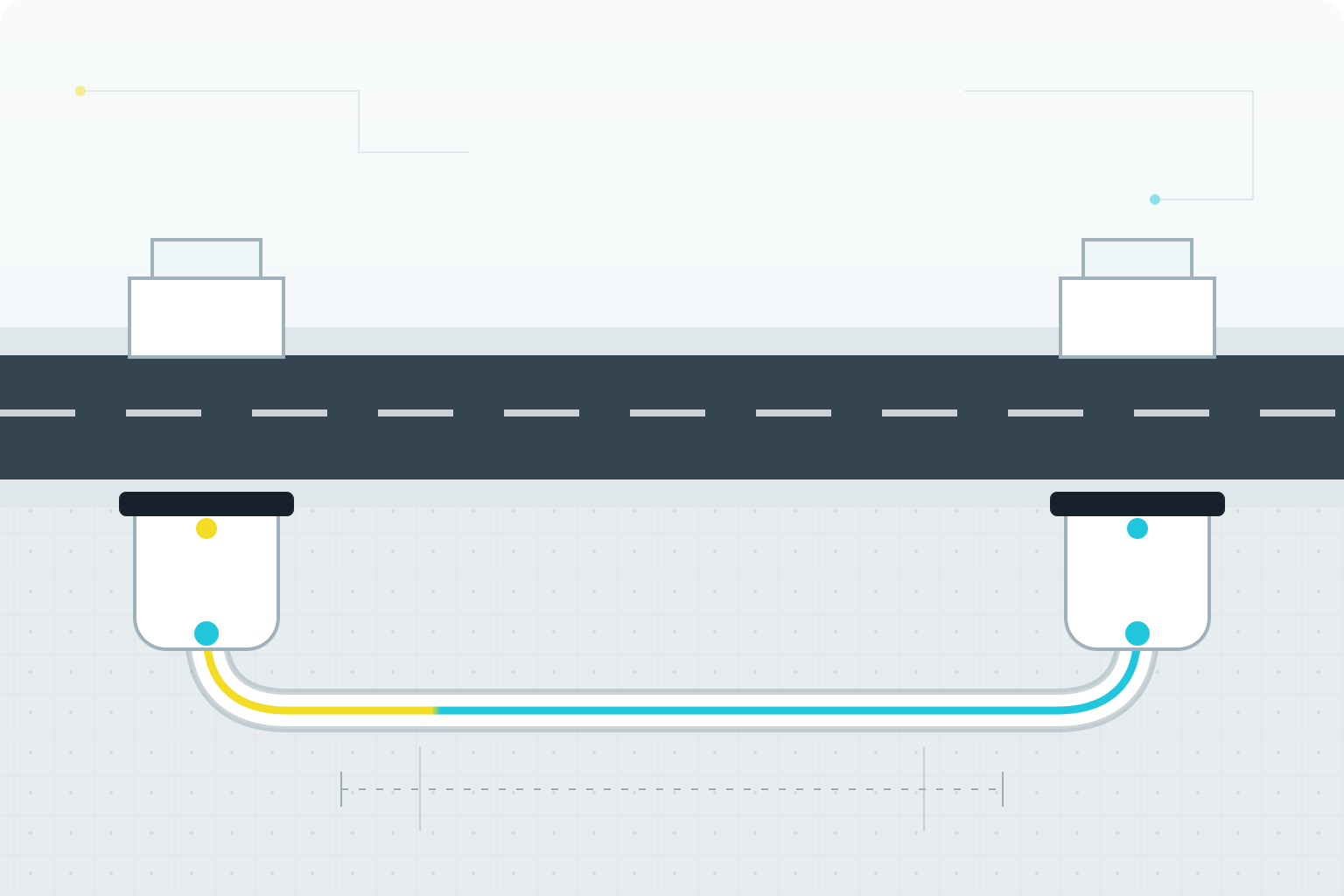
Define the route, risk, and handoff before excavation.
Utilities, bore length, entry and exit points, bend limits, drainage, restoration, pull access, and the cable that will occupy the conduit all shape a practical pathway plan.
Route and utility coordination
UaPtoTech reviews site conditions, planned endpoints, 811 or utility-locate coordination, crossings, access, and realistic entry and exit locations.
Conduit and access points
Conduit size, quantity, sweeps, handholes, pull boxes, tracer provisions, and building or pole transitions are coordinated around the future cable pull.
Self-perform or partner
Lighter scopes are self-performed. Permits, traffic control, heavy boring, asphalt work, and major restoration are assigned clearly and coordinated with qualified partners.
Typical underground pathway scope
- Route review, endpoint confirmation, and utility-locate coordination
- Short directional bores beneath roads, drives, or paved crossings
- Trenching and conduit for underground fiber or low-voltage paths
- Handholes, pull boxes, sweeps, and above-grade transitions
- Backfill and basic restoration defined in the proposal
- Fiber or low-voltage cable installation, testing, and handoff by scope
Leave a pathway that can be found, pulled, and serviced.
The closeout should identify route endpoints, handholes or pull points, conduit use, pathway photos, and any agreed as-built information. Cable installation and test records are tied to the same route when included in the project.
Before the site walk
Do you bore under roads and driveways?
Yes, for lighter short-bore scopes that fit UaPtoTech equipment and site conditions. Longer, deeper, permitted, traffic-sensitive, or heavy-civil crossings are reviewed with qualified partners.
Who handles utility locates and permits?
The proposal defines responsibilities. UaPtoTech can coordinate 811 or utility-locate requirements; permitting, traffic control, and specialized civil requirements may remain with the owner, general contractor, or a qualified project partner.
Can you install the fiber after the conduit is complete?
Yes. Underground pathway work can be combined with fiber or low-voltage cable installation, splicing, testing, labeling, and documented handoff.